Play Intentional Tennis
Fluid Mechanics • Intentional Results
Control Every Dimension of the Ball
Mastering mechanics through live-ball diagnostics — building effortless ground force, joint protection, and tactical shot control.
Foundational Biomechanics & Longevity
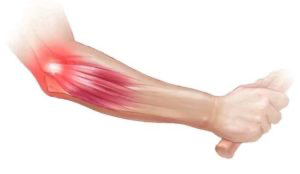
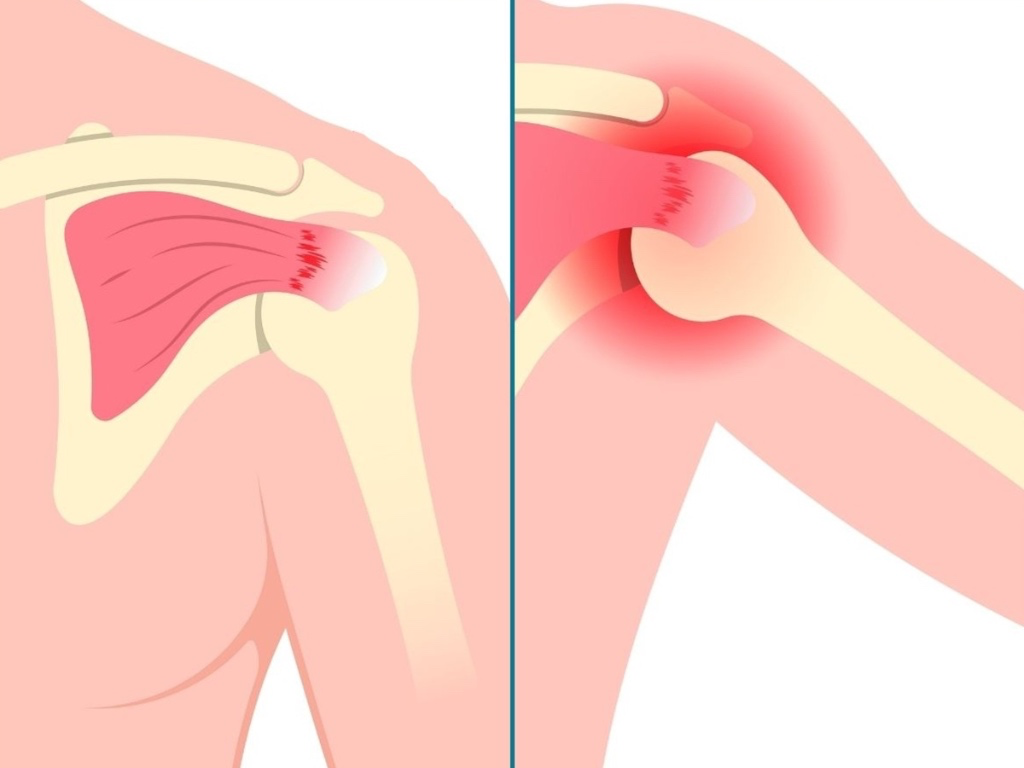
Accelerate through the ball with a full kinetic chain — from the toes pushing off the court, through the legs, core, shoulder, elbow, and wrist, finishing precisely at the index finger. Build effortless power and a controlled, repeatable rhythm without rushing the swing, while protecting your joints and preventing tennis elbow and shoulder strain.
The 4 Levers of Shot Control
Pace
Change rhythm on demand. Learn when to inject speed and when to absorb it.
Net Clearance
Build a reliable trajectory window that clears the net with margin and lands with purpose.
Placement
Move opponents, open the court, and finish points by targeting high-value zones.
Spin Control
Shape the ball with topspin and underspin to change flight, bounce, and opponent replies.
Live-ball diagnostics reveal what static drills hide. Every session is built around playing the point, not just hitting the ball.
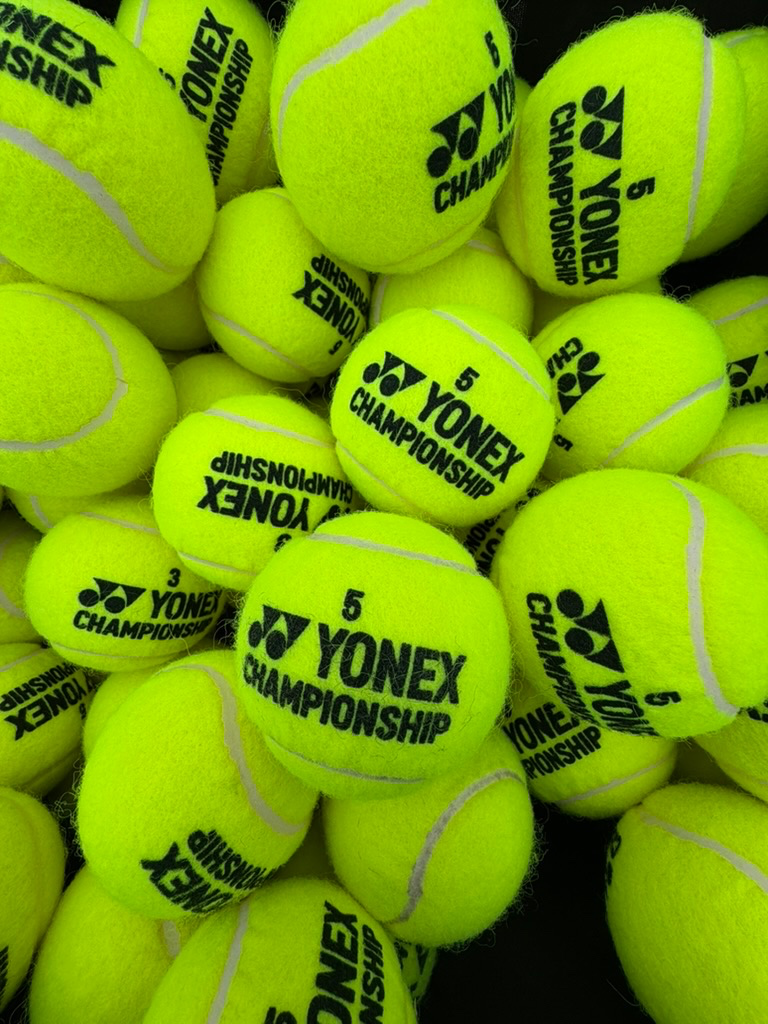
Why We Use Fresh, Uniform Balls Every Session
Inconsistent, pressureless, or worn-out balls destroy swing diagnostic accuracy. Hitting a soft ball with a mechanically perfect stroke yields a dead result— leaving students guessing whether their technique failed or the ball did. We cycle through 2 fresh cases of premium Yonex Championship balls every 3 to 4 weeks. This guarantees crisp, true bounce, uniform spin responsiveness, and precise feedback on every single hit.
Tactical Execution & On-Court Experience
All-Court & Serve Mastery
Train to own every inch of the court — Baseline, Net, and the transition zone. Master proper mechanics for Kick, Slice, and Flat serves to dictate points on your terms. Learn to drive shots with heavy topspin, control low underspin slices, incorporate subtle sidespin for placement, and execute delicate drop shots from anywhere on the court.
Tailored Goal Roadmaps
Clear, structured development paths built around your personal timeline and technical baseline. Whether your target is recreational fitness, USTA league ranking, UTR junior advancement, or college-level competition pace, every session is intentionally mapped with targeted micro-goals to track your growth, refine mechanics, and achieve sustainable results.
Fun & Adaptive Dynamics
Above all, tennis should be FUN! Coaching is never rigid — we dynamically switch gears mid-session based on your energy, mood, or what you feel like dialing in.
“Coach, let’s rally—hit heavy topspin to my backhand so I can practice taking it early, and drive low slices to my forehand so I can work on staying low and generating lift.”
Engineering Analysis Meets Clinical Precision
We combine deep technical problem-solving, biomechanical awareness, and active competitive play to deliver intentional tennis instruction.
Coach Tony
My passion for tennis began as a teenager, and over 35 years later, my love for the game is stronger than ever. Standing at 5'5", I learned early on that mastering tennis isn't about brute force — it's about kinetic efficiency, leverage, and tactical adaptability.
Before coaching full-time, I spent 15 years as a software engineer and over a decade as an international professional photographer, giving me a sharp visual and analytical eye for stroke mechanics. As an active 5.0 competitive player, daily hot yoga practitioner, and Kenpo Jujitsu black belt, I bring relentless live-ball energy, active rallying, and joint safety to every session.
- Active 5.0 Competitive Player (35+ Yrs On Court)
- 15+ Years Tennis Coaching Excellence
- Ex-Software Engineer & International Photographer
- Kenpo Jujitsu Black Belt & Daily Hot Yoga Practice
Coach Nicole
Nicole brings 7+ years of competitive tennis play (4.0 level generating 4.5+ ball pace) and coaching, paired with 4+ years as a certified yoga instructor and daily practitioner.
Her background is rooted in high-level discipline and clinical precision: she served as a U.S. Army Captain before practicing as a general dentist for over two decades. Applying bilateral stability, core-driven power, and bio-mechanical alignment, she helps students achieve fluid movement and joint protection. In our Duo-Coach sessions, we combine engineering-level analysis and clinical precision for full-court synchronized feedback.
- Active 4.0 Competitive Player (Generates 4.5+ Pace)
- 7+ Years Tennis Coaching & Competition
- Ex-U.S. Army Captain & General Dentist (20+ Yrs)
- 4+ Years Certified Yoga Instructor & Practitioner
On-Court Observations & Diagnostic Notes
There is no shortage of online videos explaining split-steps, staying on your toes, or taking small adjustment steps. We won’t repeat standard textbook advice here. Instead, we focus on the subtle biomechanical truths, mental traps, equipment realities, and court etiquette that are just as crucial — if not more — for genuinely elevating your game.
The 'Specialist' Trap vs. The All-Court Player
Most recreational players are specialists — only playing doubles, relying strictly on a forehand, or staying stuck at the net or baseline. When two forehand-only specialists pair up, tactical options vanish and running around backhands adds heavy joint wear. We train all our students to be complete, well-rounded all-court players who can plug into any court, format, or pairing with total confidence. We'd rather our students say, 'I don't feel like playing doubles today,' than 'I can't play doubles.'
The Two Types of Errors: Emotional Reactivity vs. Diagnostic Clarity
Watch players after a miss: one type reacts with anger or disbelief, while the other stays calm and resets. Frustration comes from diagnostic confusion — not knowing which of 10 variables caused the miss. Calmness comes from instant mechanical clarity ('I was late on my footwork' or 'I lifted my eyes early'). When you replace mystery with mechanical awareness, emotional frustration vanishes and you simply adjust on the next hit.
Re-framing 'Was That In?': Target Margins by Player Level
Asking "Was that in?" after a deep shot is an ego query, not a technical diagnostic. Smart players aim 4 to 18 feet inside the baseline—never directly on the boundary line. Adjust your target window based on your skill level:
• Beginner Level: Aim 9 to 18 feet inside the baseline (where 18 feet is near the service line) to build depth tolerance and eliminate unforced baseline errors.
• Intermediate Level: Aim 6 to 12 feet inside the baseline to balance heavy depth with consistency.
• Advanced Level: Aim 4 to 8 feet inside the baseline for maximum offensive pressure while maintaining a safe margin for error.
If you aimed 6 feet inside the baseline and the ball landed so close to the line that you had to ask if it was in, you missed your intended target by 6 feet. Reframe your performance evaluation around target accuracy rather than boundary-line luck.
Beyond Dogma: Grip Adaptability & Multi-Hand Mechanics
Don't limit your game to rigid TV templates. While a single-handed stroke offers spatial reach, two hands on the frame add structural stability, absorb heavy pace, and protect joints (Coach Nicole utilizes a double-two-handed system generating 4.5+ pace with high joint safety, while Coach Tony utilizes both 1H and 2H backhands). Additionally, choking up 1/2 inch on the grip reduces swing weight and increases maneuverability for developing players. Explore what gives your body stability and control.
'Watch the Ball' is Not Enough: Spot-Contact Precision
Every coach says 'watch the ball,' but passively tracking a moving sphere leads to approximate contact. We don't just watch the ball; we lock our eyes onto the exact micro-spot on the ball where contact must occur. For example, when driving down the line — where the net is higher at the post and the court depth is shorter — you need precise lift and directional control. We lock our eyes specifically on the lower-outside quadrant of the ball. This visual focus naturally guides the racquet face low-to-high and around the ball for exact trajectory control. Passive vision creates passive contact — spot precision creates intentional execution.
3 Physical Anchors for a Still Head & Upper Body
Abstract commands like 'keep your head still' rarely stick. Turning your head early yanks your shoulders out of alignment and destroys stroke stability. We use 3 physical indicators to anchor the head:
1) Chin-to-Shoulder Gate: Start your forehand unit turn with your chin resting on your front shoulder; finish with your back shoulder coming up to meet your chin while your head stays locked.
2) Background Visual Anchor: Track the ball into contact, and after hitting, deliberately focus your eyes on the crisp court surface at your contact point before turning your head.
3) The Ball Flight Test: When you finally turn your head, the ball should already be deep on the other side of the court before the bounce.
The Outcome Bias Trap: Measuring Growth Beyond Ws & Ls
Judging performance strictly by wins and losses holds back improvement. The scoreboard is a moving target—you can play poorly and beat a beginner, or play brilliant, high-level tennis and lose to a superior player. I’d choose playing a great game against a tougher opponent and losing over playing a bad game and winning every single time. Real progress comes from evaluating controllable execution—what went well mechanically, what needs adjustment, and where you met your intentional standards—regardless of the final score.
Systematic Opponent Auditing: Force Them to Win with Their Weakest Tool
Great match players don't guess—they audit. Your goal is to systematically test your opponent's limitations and force them to win points with their weakest tool. Test baseline consistency, lateral movement on the run, high-bouncing topspin vs. low skidding slice, and net transition comfort on short balls. Adapt to physical and tactical profiles:
• Taller Opponents: Use low skidding slices to force constant deep knee bending.
• Smaller Opponents: Shape high, heavy topspin balls that jump above their preferred strike zone.
• Heavy Hitters / Limited Mobility: Deploy sharp sideline angles (think Andre Agassi) and tactical drop shots. Test them under pressure by coming to the net to take away their time and force high-quality passing shots.
• Moon-Ballers: Move forward to take the ball early near the service line and put points away using swinging volleys or overheads before the ball bounces high.
To audit an opponent effectively, you must first build a complete, versatile toolkit yourself.
The Evolution of Perception: The Three Stages of Learning & Repeated Instructions
Students often wonder why a coach repeats the exact same instructions—like "bend your knees," "finish low to high," or "hit out in front"—from their very first month on court all the way into advanced 4.5+ play.
Tennis, like life, is an ongoing journey where we are blessed to keep learning for continuous self-improvement. While some view earning a teaching license or certification as the finish line, I believe it is simply the true starting line—for both coaching others and refining one's own practice.
Learning any complex skill isn't a straight line; it unfolds in distinct phases of perception and humility:
The 3 Stages of Skill Evolution:
- Stage 1 (Absorption): Active listening and learning to execute foundational mechanics.
- Stage 2 (Plateau / Self-Reliance): Developing baseline confidence where a student feels they know "what" to do and no longer need basic guidance. Most players stall here, mistaking familiar advice for fully mastered execution.
- Stage 3 (Mastery / Deep Synthesis): Recognizing that true mastery reveals how much deeper the skill goes ("The more I learn, the less I know"). Players return to active listening, seeking nuance and kinetic layers they couldn't perceive before.
The Moon Analogy (Teacher statement: "The moon is farthest from Earth right now."):
- Elementary Student: "That means it's super far away in space!" (Basic qualitative awareness)
- Junior High Student: "It's around 250,000 miles away from Earth." (Concrete baseline facts)
- High School Student: "It's at apogee on its elliptical orbit, roughly 252,000 miles away." (Precise spatial framing)
- College Student: "It reached apogee at ~406,700 km, meaning light travel time is currently at its maximum of roughly 1.35 seconds." (Dynamic, multi-variable comprehension)
How This Applies to Your Tennis Kinetic Chain ("Bend Your Knees"):
- Foundation Phase (2.0): "Bend your knees" simply means physically lowering your posture so you don't stay completely upright.
- Developing Phase (2.5 - 3.0): "Bend your knees" becomes conscious footwork timing—lowering down as the ball approaches to stay balanced through the hit.
- Intermediate Phase (3.5 - 4.0): "Bend your knees" transforms into active ground force loading—sinking into the court to drive hip turn and core coil.
- Advanced Phase (4.5+): "Bend your knees" becomes an integrated kinetic spring—storing ground reaction energy to uncoil the entire chain and release effortless pop into the contact point.
When a tip is repeated, the instruction hasn't changed—your capacity to absorb and execute it at a deeper kinetic level has.
Long-Term Retention & Progression
Unlike traditional lessons that focus on quick hacks or endless bucket-feeding, our instructional system is built for sustainable growth and kinetic longevity.
• Average Student Retention: 2 to 4 years.
• Why Players Stay: We guide athletes through every phase of biomechanical development—from foundational stroke mechanics to advanced point construction and ground-force loading—ensuring continuous, injury-free progression at every stage of their game.
Finding the 'Right' Feel: Reason vs. Luck
Regardless of skill level, every tennis player steps onto the court searching for that clean, effortless "right" feel in their strokes. Once found consistently, confidence follows.
The fundamental difference between self-taught players and structured athletes lies in how that feel is discovered:
• Finding Feel Through Luck vs. Reason:
- The Self-Taught Loop: Players stumble upon the "right" feel by trial and error. When a shot sails long or dumps into the net, they lack the mechanical diagnostic tools to know why it happened (e.g., racket face angle, contact point latency, or kinetic chain leakage).
- The Intentional System: When you understand the biomechanical purpose behind every segment of your stroke, you stop relying on luck. Mechanics provide the clear diagnostic framework to identify errors, adjust rationally, and build repeatable feel with intention.
• Building the Stroke in Layers:
- Don't Rush the Full Swing: Never jump straight into maximum racquet head speed. Isolate and layer your stroke mechanics step-by-step.
- Gradual Distance Expansion: When moving from short-court to the baseline, resist making drastic mechanical changes. Keep your pace steady and lift the ball higher over the net first. Gradually lower the trajectory, increase pronation, and accelerate for pace. Once your depth is dialed in, begin working the sidelines. Apply this exact progression to underspin, backhands, and serves.
- Reset Every Session: Even if your strokes felt flawless during your last outing, always restart at Step 1 the next time you step on court. Rushing directly into the peak swing you left off with rarely ends well. Build the foundation first, every single time.
Simple, Transparent Pricing
No packages to decode. Buy hours, book sessions, and train on your schedule.
First Session on Us
Experience our live-ball diagnostic before committing to a package. We'll audit your stroke mechanics, kinetic chain, and movement baseline in a complimentary 30-minute session.
Trusted by players across San Jose • Rated 5.0 Stars on Yelp
Solo Training
One-on-one coaching with Coach Tony.
- Personalized live-ball drills
- Video-friendly technique feedback
- Flexible scheduling
- Focused Live-Ball Rally Requests: on-demand rallies tuned 10%–60% pace and spin intensity, directed to your forehand or backhand with custom topspin or underspin (slice)
Duo-Coach Experience
Tony & Nicole — synchronized, full-court training.
Counts as 2 package hours
- Includes separate-court sessions for individualized diagnostic training
- Includes the option to switch coaches mid-session for fresh mechanical and strategic perspectives
- Includes shared-court time for high-intensity doubles rallies and doubles/mixed strategies
Book Solo or Duo-Coach sessions interchangeably at any time — you are never locked into one format for your package.